

Ranking on Google is not only about writing good content, it is also about choosing the right keywords. Many businesses publish blog posts regularly but still struggle to get traffic because they target keywords that are too competitive.
This is where learning how to Find Low Competition Keywords becomes essential. When you focus on keywords that are easier to rank for, your website has a much higher chance of appearing on the first page of search results.
However, many website owners still ask:
- How do I choose the right keywords?
- What tools help identify ranking opportunities?
- How many keywords should be used in a page?
The good news is that you don’t need expensive software to start. Several free keyword research tools can help you analyze keyword opportunities and build a strong SEO strategy.
In this guide, we’ll walk through a practical approach to Find Low Competition Keywords using reliable SEO techniques and trusted tools. We’ll cover:
- The basics of understanding keywords
- The most important types of keywords in SEO
- Practical methods for choosing keywords that can rank
- How to analyze keyword trends using Google Trends
- Free tools that help discover low competition opportunities
By the end of this article, you’ll have a clear process for identifying keywords that can realistically bring traffic to your website.
Understanding Keywords in SEO
Before learning how to Find Low Competition Keywords, it’s important to begin with understanding keywords.In SEO, a keyword is a word or phrase that users type into search engines when looking for information, products, or services. Search engines analyze these search queries and try to display the most relevant pages.
For example, someone searching on Google might type:
- “how to find low competition keywords”
- “free keyword research tools”
- “how many keywords for SEO”
Each of these searches represents a specific need or intent.Search engines analyze many factors — including content quality, relevance, and authority to decide which pages should rank for those keywords.
Why Keywords Matter
Keywords help search engines understand what your content is about. When a page includes relevant keywords in a natural way, it signals to search engines that the content answers the user’s query.
However, targeting highly competitive keywords often means competing with large, authoritative websites. For many new websites or small businesses, focusing on low competition keyword opportunities is a more realistic and effective strategy.
Boost Visibility & Revenue with Our Activity-Based cost Driven Digital Marketing Services.
Types of Keywords in SEO
To effectively Find Low Competition Keywords, you need to understand the different types of keywords used in SEO. Each category plays a different role in content optimization.
Example table:
| Keyword Type | Description | Example |
|---|---|---|
| Short-tail keywords | Broad keywords with high search volume | SEO tools |
| Long-tail keywords | Specific keywords with lower competition | how to find low competition keywords |
| Secondary keywords | Supporting keywords related to the main keyword | keyword difficulty checker tool |
Learning how to choose keywords is one of the most important SEO skills. Not every keyword is worth targeting, and choosing the wrong keywords can prevent your content from ranking.
When trying to Find Low Competition Keywords, SEO professionals usually evaluate three key factors.
Search Volume
Search volume shows how often a keyword is searched each month.Keywords with extremely low search volume may not generate meaningful traffic. However, keywords with extremely high search volume often have intense competition.
For newer websites, targeting keywords with moderate search volume can provide a better balance between visibility and competition.
Keyword Difficulty
Keyword difficulty estimates how hard it will be to rank for a keyword.Many SEO platforms provide a keyword difficulty checker tool that analyzes factors such as backlinks, domain authority, and competition among ranking pages.
Lower difficulty scores usually indicate fewer strong competitors, making it easier to Find Low Competition Keywords that a new website can realistically rank for.
Search Intent
Search intent refers to the reason behind a search query.Understanding intent helps ensure that your content matches what users expect to find.
For example:
- Informational search: “how to find low competition keywords”
- Research search: “best keyword research tools”
Example Table:
| Criteria | Recommended Range | Why It Matters |
|---|---|---|
| Search Volume | 500–3000 | Good balance between traffic and competition |
| Keyword Difficulty | Under 30 | Easier to rank for new websites |
| Search Intent | Informational / transactional | Matches what users are searching |
Keyword Trend Analysis Using Google Trends for Mother Keywords.
Keyword research should also include trend analysis. Understanding whether a keyword is gaining or losing popularity can help you prioritize topics with long-term potential.
Step 1: Start With a Mother Keyword
A mother keyword is a broad topic that represents the main idea of your content.
Examples include:
- keyword research
- ecommerce branding
From this primary topic, you can generate dozens of related keyword ideas.
Step 2: Generate Keyword Ideas With AI Tools
AI tools such as GPT can quickly generate lists of related keywords based on a topic, . For example,
A prompt you can use (for ChatGPT or other AI tools) where you provide a mother keyword and it generates related keywords for Google Trends analysis. Here’s a clean and effective prompt you can reuse.
Act as an SEO and keyword research expert.
I will give you a main (mother) keyword. Your task is to generate 30–50 related keywords that are suitable for Google Trends analysis.
Requirements:
Include a mix of broad keywords, niche keywords, and long-tail keywords
Focus on search intent related to the main keyword
Avoid duplicates
Keywords should be commonly searched on Google
Group the keywords into categories such as:
Core keywords
Related topic keywords
Long-tail keywords
Platform or industry-specific keywords
Main keyword: [Insert your main keyword here]
Return the keywords in a clean list format so they can easily be copied into Google Trends.
Step 3: Validate Keywords With Google Trends
After generating keyword ideas, Google Trends can help analyze their popularity. Google Trends allows you to examine:
- search interest over time
- related queries
- rising keywords
This step helps identify keywords that are becoming more popular and may represent good opportunities to Find Low Competition Keywords.
Best Free Keyword Research Tools to Find Low Competition Keywords
Many beginners assume they need expensive SEO software to perform keyword research. However, several free keyword research tools can provide valuable insights.
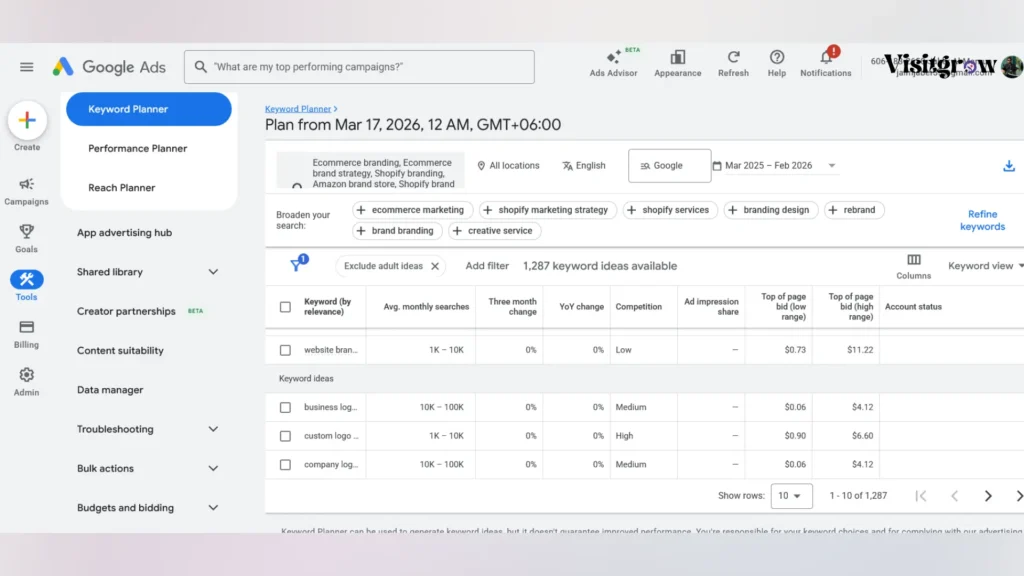
Google Keyword Planner is a free tool provided within Google Ads. It offers keyword suggestions and basic search volume estimates.
Many marketers use this tool to generate keyword ideas and evaluate potential search demand.
Google Keyword Planner vs Ahrefs
The comparison between Google Keyword Planner vs Ahrefs highlights the difference between free and advanced SEO tools.
Google Keyword Planner provides:
- keyword suggestions
- search volume estimates
Ahrefs offers more advanced insights, including:
- keyword difficulty analysis
- competitor research
- backlink data
While Ahrefs is powerful, beginners can still Find Low Competition Keywords using free tools before investing in premium software.
Ubersuggest
Ubersuggest is another widely used SEO tool with a free version.
Key features include:
- keyword suggestions
- SEO competitor insights
- built-in keyword difficulty checker tool
It is especially helpful for beginners who want quick insights into keyword competition.
Google Trends
Google Trends focuses on keyword trend analysis rather than search volume.
It helps marketers identify:
- trending search topics
- seasonal keyword trends
- geographic search interest
Using Google Trends together with other research tools can help uncover emerging opportunities.
Free Keyword Research Tools using a comparison table
| Tool | Free Version | Features |
|---|---|---|
| Google Keyword Planner | Yes | Keyword ideas, search volume |
| Ubersuggest | Yes | Keyword difficulty checker tool |
| Google Trends | Yes | Keyword trend analysis |
| Ahrefs | Limited free tools | Keyword research, keyword gap analysis |
What Is Keyword Gap Analysis?
A keywords gap analysis identifies keywords that competitors rank for but your website does not.This technique helps discover content opportunities that your competitors have already validated.
Tools like Ahrefs and SEMrush allow marketers to compare domains and identify missing keyword opportunities.By analyzing these gaps, businesses can discover new topics and expand their SEO strategy more effectively.
How Many Keywords for SEO Should You Target?
A common question beginners ask is how many keywords for SEO should be used within a single page
Modern SEO strategies typically focus on:
| Content Type | Recommended Keywords |
|---|---|
| Blog post | 1 primary + 5–10 secondary keywords |
| Landing page | 1–3 keywords |
| Product page | 3–5 keywords |
How to Check Keyword Rankings
After publishing optimized content, the next step is tracking how it performs in search results.A google keyword rank checker helps monitor where your pages appear for specific search queries.
Google Search Console
Google Search Console is a free tool provided by Google that allows website owners to monitor search performance.
It shows:
- search queries that trigger your pages
- impressions and clicks
- average ranking positions
This data helps identify which keywords are driving traffic.
Ahrefs
Ahrefs offers advanced rank tracking tools that allow you to monitor keyword performance and analyze competitor rankings.
Ubersuggest
Ubersuggest also includes a built-in google keyword rank checker, making it easier to track keyword rankings and monitor SEO progress.
Conclusion
Learning how to Find Low Competition Keywords is one of the most effective ways to build organic traffic.Instead of competing with large websites for highly competitive keywords, focusing on achievable opportunities allows businesses to grow steadily in search results.
Start with a clear marketing strategy, stay consistent across channels, and regularly analyze performance to understand what’s working. By applying the right digital marketing trends, optimizing for social search, build stronger customer relationships and drive sustainable growth in 2026 and beyond.
No, not always. Some low competition keywords can still have decent search volume. The key is finding a balance between search demand and competition.
It can take anywhere from a few weeks to a few months, depending on your content quality, website authority, and competition.
Yes, in many cases you can rank without strong backlinks if the keyword has low competition and your content is well-optimized.
Another common question is how many keywords should a website have overall. Instead of focusing on a fixed number, it is better to think about keyword coverage across the entire site. Each page should target a different keyword theme.
For example:
- Homepage targets a primary brand keyword
- Service pages target commercial keywords
- Blog posts target informational search queries
The most important rule is avoiding keyword cannibalization — when multiple pages compete for the same keyword.