10 unique digital marketing trends in 2026 that Forward-Thinking Brands Stay Competitive
Digital marketing in 2026 is shaping up to be more intelligent, immersive, and human-centered than ever. Consumers now expect instant answers, personalized experiences, seamless shopping flows, and content that respects their time and attention. The brands that meet these expectations won’t just grow they’ll dominate. Those that fail to evolve will fade into irrelevance.
2026 isn’t about following trends blindly. It’s about understanding the deeper shift happening across consumer behavior, technology, and brand trust. The digital world is evolving toward smarter experiences, more transparency, and more meaningful engagement. If your strategy doesn’t match these expectations, your competitors will outpace you fast.
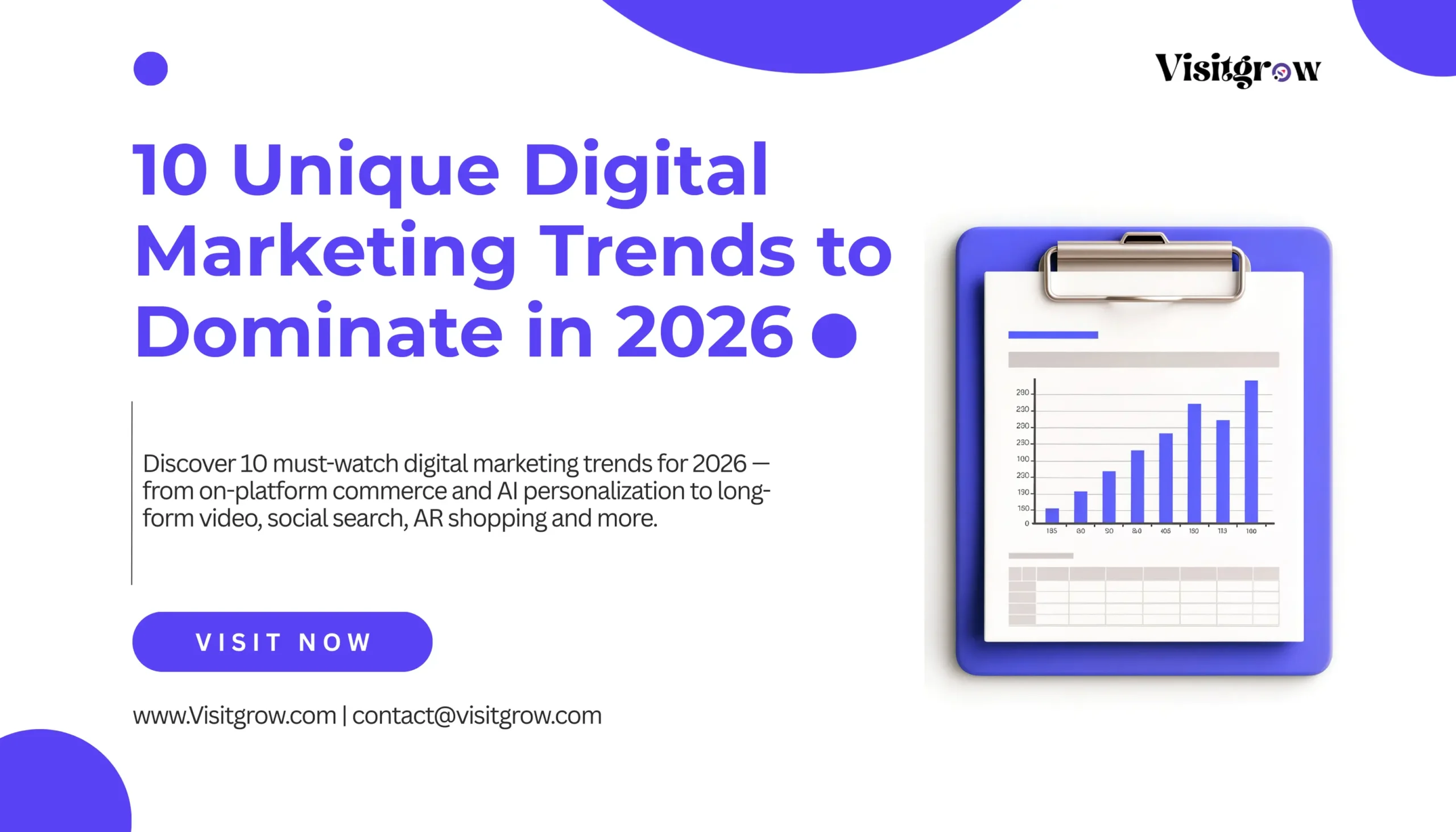
Below are the 10 Unique Digital Marketing Trends (b2b digital marketing trends) that will define 2026 written in a clear, balanced mix of storytelling and strategy — like a high-performing blog that actually gets read, shared, and bookmarked. No repetitive robotic templates. No generic explanations. Just insights you can use immediately.
1. AI-Powered Hyper-Personalization at Scale
AI has officially moved from “nice to experiment with” to “non-negotiable for competitive brands.” In 2026, personalization becomes incredibly intelligent, contextual, and much more human-like.
Instead of broad segments (“women 25–45 who like wellness”), AI now adapts content based on micro-behaviors — browsing patterns, purchase timing, sentiment shifts, engagement depth, and even emotional cues.
What this looks like in real life
- A customer gets product recommendations based on what they viewed three times this week.
- Emails automatically adjust their tone depending on whether the user prefers casual or formal writing.
- Website content reorganizes itself based on what the visitor cares about most.
- Customers receive reminders that feel timely and thoughtful — not spammy.
Consumers increasingly expect this level of relevance. They reward brands that “get them” and ghost brands that don’t.
AI makes your marketing feel more human, not less — as long as you use it thoughtfully.
Where it’s heading
Hyper-personalization will blend predictive analytics + emotional intelligence + real-time triggers. Brands that adopt it early will create experiences that feel effortless for customers and profitable for themselves.
2. Optimize for voice search 2.0: Conversational Commerce Takes Over
Optimize for voice search assistants have come a long way from playing music or setting timers. In 2026, voice search plays a major role in product discovery, comparison, and even purchasing.
Consumers now feel comfortable asking assistants deeper questions like:
- “What’s the best skincare routine for oily skin?”
- “Find me a gift under $50 for my brother who likes tech.”
- “Which gym near me has good reviews and is open now?”
Why this matters
People use voice search when they want quick, convenient answers. If your content isn’t optimized for spoken queries, you’re missing a rapidly growing segment of buyers.
What smart brands will do
- Create FAQ-style content that directly matches natural speech patterns.
- Optimize for long-tail keywords like “best café near me open now” instead of short terms.
- Structure articles in Q&A format so assistants can pull direct answers.
- Ensure Google Business Profile info is updated weekly — voice assistants rely on it heavily.
3. AR & VR Shopping: Immersive Experiences Become the New Normal
Trying products before buying them — without stepping into a store — is one of the biggest shifts in modern commerce. Augmented Reality (AR) and Virtual Reality (VR) make this possible.
Where AR/VR is exploding
- Beauty: virtual makeup try-ons
- Retail: see how furniture looks and fits in your space
- Automotive: VR test drives
- Real estate: virtual home tours
- Education & B2B: VR training rooms and simulations
These immersive experiences reduce uncertainty and build trust. Customers feel confident because they’ve “experienced” the product before purchasing it.
Why brands should care
Return rates drop. Conversions go up. Customer satisfaction skyrockets.
By 2026, AR/VR will be a competitive differentiator — not a novelty.
4. The New Video Era: Short, Long, and Everything In Between
For years, short-form videos dominated. Then something interesting happened: people got tired of endless quick clips with no substance. They wanted depth, story, and value.
Now in 2026, both formats matter — but in very different ways.
Short-form videos
Perfect for:
- Instant attention
- Product teasers
- Relatable content
- Social “virality”
Long-form videos
Perfect for:
- Tutorials
- Reviews
- Case studies
- Storytelling
- Building trust
Brands that master both will create strong content ecosystems — short videos attract the audience while long videos convert them into loyal followers.
It’s like running your own mini Netflix + TikTok combo.
5. Social Media Has Become a Search Engine
Younger audiences aren’t running to Google first anymore. They’re going straight to:
- TikTok
- YouTube
Search behavior has officially shifted. Instead of typing “how to style curly hair,” people now search for it on TikTok because they want fast, visual results from real creators.
What this means for your brand
Your posts need to be optimized like searchable content, not just social content.
That means:
- Using keywords naturally in captions and on-screen text
- Saying the keyword out loud (platforms transcribe audio!)
- Designing content that answers questions, not just entertains
- Creating evergreen videos that rank in-app
If your content doesn’t appear in social search results, you’re invisible to millions of potential customers
Boost Visibility & Revenue with Our Activity-Based cost Driven Digital Marketing Services.
6. Expert Personal Brands Are Replacing Traditional Influencers
Influencer marketing is going through a complete evolution.
Followers alone don’t mean influence anymore. Audiences want credibility, experience, and real value — not just pretty pictures.
Creators who educate, explain, break things down, and demonstrate real expertise are taking over. These are:
- Nutritionists
- Fitness coaches
- Tech reviewers
- Finance educators
- Skincare specialists
- Niche industry professionals
These “micro-experts” often generate far higher conversions than celebrities or lifestyle influencers because their audience truly trusts them.
Why brands love expert creators
- Higher engagement
- More targeted audiences
- More authentic content
- Better long-term ROI
7. Interactive Content Takes Center Stage
People are tired of being passive consumers. They want experiences — things to click, explore, and play with.
That’s why interactive content is booming.
Examples of high-performing interactive content:
- Quizzes (“Find your perfect skincare routine”)
- Polls and surveys
- Product recommendation tools
- AR filters
- Mini games
- Calculators (“How much can you save switching providers?”)
Interactive experiences help users feel involved. They spend more time with your brand, and they share more information voluntarily — which is gold for personalization.This trend will dominate across websites, landing pages, ads, and social platforms.
8. Sustainability Marketing Becomes Real, Transparent, and Measurable
Consumers especially Gen Z and younger millennials — demand honesty. The days of vague “eco-friendly” claims are over. People want proof, not buzzwords.
Brands will start showcasing:
- Carbon footprint labels
- Recycling stats
- Water usage metrics
- Ethical sourcing information
- Verified certifications
Transparency builds trust. Trust drives revenue.
Why this matters in 2026
Customers vote with their wallets. If a product’s sustainability claims feel real and measurable, they’re far more likely to buy.
Brands that can back up their environmental claims will earn deeper loyalty than ever.
9. Ethical AI & Privacy-First Marketing
AI is powerful and consumers know it. That means expectations are shifting toward transparency and fairness.
People want to understand:
- How their data is used
- Why they’re seeing certain recommendations
- Whether algorithms treat them equally
Key movements inside this trend
- More transparent consent options
- “Why am I seeing this?” explanations
- Clear data-use policies
- Bias audits on AI-driven campaigns
Honest communication about automation
10. Cross-Platform Automation Becomes the Backbone of Marketing
Gone are the days of running separate campaigns on each platform. Automation tools now connect everything into one unified flow.
Imagine this journey:
- Someone watches your TikTok video
- They see a personalized Instagram ad later
- They receive an email with a curated recommendation
- Your website shows dynamic content based on their behavior
No manual coordination. No chaos. Just clean, intelligent automation.This is the new standard for marketing efficiency. It saves time, increases personalization, and dramatically improves conversions.
Before applying any digital marketing trend, whether it’s AI, AR, automation, or social search you need to deeply understand who you’re talking to.
A customer avatar is more than demographics. It’s:
Their goals
Their frustrations
Their values
Their motivations
Their spending behavior
Their emotional triggers
When you know your ideal customer at a deep level, your strategy becomes focused, your messaging becomes sharper, and your entire marketing system aligns with real human behavior instead of assumptions.
Conclusion
10 unique digital marketing trends for 2026 isn’t about chasing the newest tool, it’s about understanding how people are changing and using technology to meet them where they are. AI will make personalization smarter, AR will make shopping more immersive, and automation will connect the entire customer journey. But at the core of every winning strategy is a human-focused approach: clarity, trust, and real value.
Adopt these trends with intention, stay curious, and your brand won’t just keep up with the future , it will help shape it.
Start with a clear marketing strategy, stay consistent across channels, and regularly analyze performance to understand what’s working. By applying the right digital marketing trends, optimizing for social search, build stronger customer relationships and drive sustainable growth in 2026 and beyond.
Not even close. AI removes repetitive tasks so marketers can focus on creativity, strategy, and storytelling.
Not immediately, but simple AR previews or Instagram filters are easy entry points.
No — but the type of influencer is changing. Expertise now outranks follower count